

Nobody tells you that the hardest part of a car ride is not the ride. It is the getting out. I found that out the hard way two winters ago, when my left leg picked the worst possible moment to stop cooperating and I sat in the passenger seat of our 2019 Honda CR-V for a good ten minutes trying to figure out how I was going to stand up. My husband Rob had one hand on the door frame and one hand reaching for me, and I could see in his face that he was already working out how he would call the grandsons to come help. That is when I started looking at the Stander HandyBar, and that is what this review is about: what it is actually like to live with one, not what the product page promises.
I have had relapsing-remitting MS for fourteen years. On good days I walk with a cane. On long outings I use a rollator, and on big days out Rob pushes a folding transport chair. The common thread is that my left leg does not always do what I ask it to, and getting out of a low car seat is a move that requires both legs to agree at exactly the same moment. The Stander HandyBar is a small portable handle that clips onto the door striker post of most cars, giving you something solid to pull against while you stand. It costs a fraction of what a vehicle modification costs, it takes about ten seconds to install, and it has quietly changed how I plan every errand. I also have some honest complaints about it, and you should hear those too.
The Quick Verdict
The Stander HandyBar is the best low-cost mobility aid I own, but it is not magic: it needs the right car, the right door, and a little practice before it feels natural.
Amazon Check Today's Price →If you dread the getting-out part of every car ride, this is the fix that costs less than a tank of gas.
The Stander HandyBar installs in seconds, works on most cars, and gives you something solid to pull against every single time.
Amazon Check Today's Price on Amazon →How I've Used It
I have used the Stander HandyBar every day for the past six weeks, which means somewhere around forty real-world exits: from the passenger seat of the CR-V, from the back seat when my granddaughter rides shotgun, from my sister-in-law's sedan when we carpool to lunch, and once, memorably, from a neighbor's truck that sits high enough that I needed both the handle and Rob's arm. I keep it clipped to the striker post on the passenger side, and I have moved it to the driver's side exactly twice, when Rob was driving my car and I needed to get in on the driver's side for a medical appointment.
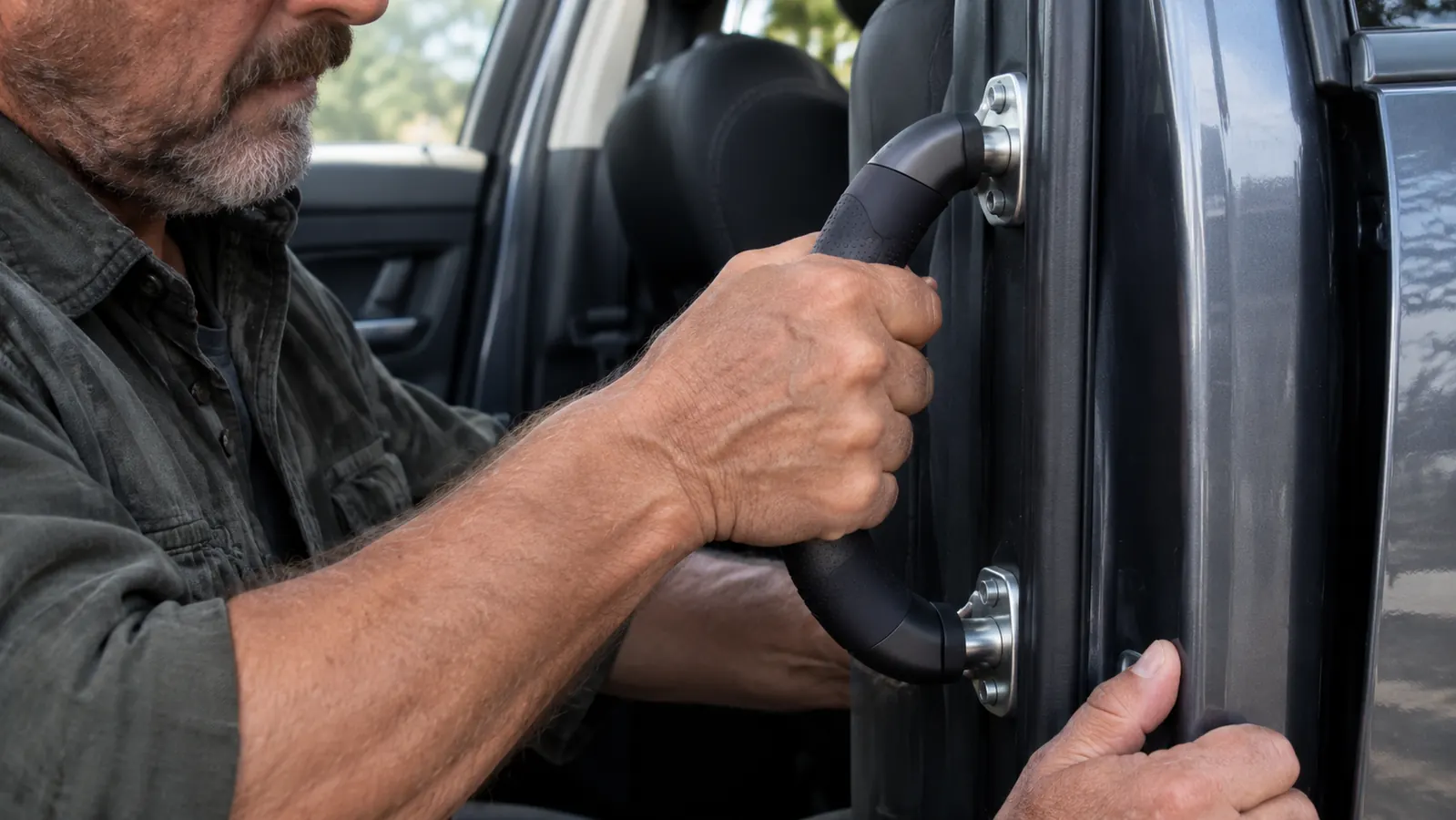
The installation is genuinely ten seconds. You open the door, slide the U-shaped bracket over the metal striker post where the door latches, and push the handle down until it clicks. There is no tool, no permanent change to the car, and no risk of scratching anything if you are careful. The first time I did it, I expected to need the manual. I did not. I ordered it on a Thursday and it arrived the following Tuesday, which gave me the whole weekend to wonder whether I had wasted my money. I installed it in the driveway that same afternoon, before I could talk myself out of it. My only advice is to do it with the door open and your weight on the seat, because the clip is stiff when it is new.
Before I bought it, I tried two other things, and both failed in instructive ways. The first was a loop of rope tied to the grab handle above the door. It worked exactly once, then slid down the door panel and left a scuff mark I had to rub out with a damp cloth. The second was a cane hooked over the window sill, which tipped sideways the moment I put weight on it and nearly sent me back into the seat. The HandyBar was my third attempt, and the difference was immediate. The U-shaped bracket is about two inches wide, and it seats over the striker post with a click you can hear, so you know it is on before you trust it. The striker post on the CR-V sits at roughly seat height, which turns out to be the ideal position for a pull. On my sister-in-law's sedan the post sits a little lower, so I bend my elbow more, but it still works.
The grip itself is the part that surprised me. It is a thick, non-slip foam that feels almost soft, and it is shaped so your palm lands naturally. I have small hands for a woman my height, and I can get a full grip without my fingers overlapping. My sister-in-law, who has arthritis in both thumbs, tried it in the parking lot of the diner and said it was the first car handle she had used that did not make her knuckles ache. That is not a claim Stander makes on the box, but it is the thing I noticed most.
What Nobody Tells You Before You Buy It
Here is the honest part. The Stander HandyBar is not a universal fit. It works on the striker post of most cars, but not all. My neighbor's older sedan has a striker post that is slightly recessed, and the clip will not seat fully, which means the handle wobbles when you pull on it. I checked it with a ruler out of curiosity: the post is about a quarter inch too shallow for the bracket to grab. A wobbly handle is worse than no handle, because you instinctively trust it and then it moves. I do not use it in that car. I use it in the CR-V and in my sister-in-law's car, and I check the fit every time before I put my weight on it.
The second thing nobody tells you is that the handle changes the way you get out, and that takes practice. With a cane, I push up from the seat with my right arm and swing my left leg out. With the HandyBar, I have to reach across my body to grip it with my right hand while my left hand pushes on the door frame, and then I pull and push at the same time. The first three days, I did it wrong and ended up half-standing, half-leaning, with Rob hovering. By the end of the first week, it was automatic. What finally made it click was a tip from my physical therapist: she told me to keep my chin up and look at the horizon while I pulled, because looking down at my feet throws my weight forward. I tried it that same afternoon in the driveway, and it worked on the first try. If you are buying this for someone who is not used to new routines, plan for a few days of awkwardness.
The third thing is the emergency tools. The Stander HandyBar has a window breaker and a seat belt cutter built into the base, which sounds reassuring until you realize you will almost certainly never use them, and that they add a little bulk to the handle. I have never needed either. I have, however, tested the seat belt cutter on an old belt from the garage, and it works. The window breaker is the kind of thing you hope stays in the package forever. I mention it because some reviews treat the tools as the main selling point, and for me they are a bonus, not a reason to buy.
One more thing about fit: the handle works best on the front doors. The back doors of the CR-V have the same striker post, but the angle is different, and reaching across your body from the back seat is harder. When my granddaughter rides shotgun, I sit in the back and I use the door frame instead. It is not a failure of the product. It is just a geometry thing, and I would rather tell you now than have you discover it in a parking lot.
The first three days I did it wrong and ended up half-standing, half-leaning, with Rob hovering. By the end of the first week, it was automatic.
What It Does for a Bad Leg Day
The real test of any mobility aid is not the good day. It is the day when your leg is barely speaking to you and you still have to get to a physical therapy appointment. I had one of those days three weeks ago, on a Tuesday morning in late July. The temperature was already pushing ninety by nine o'clock, which is the enemy of MS fatigue, and the drive to the clinic was forty minutes of highway heat. By the time we reached the parking lot, my left leg had gone from weak to nearly silent. Getting out of the car should have been a ten-minute ordeal. With the HandyBar, it was one pull, one pivot, and I was standing. Rob did not even have to get out of the driver's seat. I walked into the appointment on my cane, five minutes early.
That is the thing I want people to understand. The Stander HandyBar does not fix my MS. It does not make my leg stronger or my balance better. What it does is remove one specific point of failure from my day, the moment where I used to have to choose between asking for help and risking a fall. Removing that choice is enormous. It is the difference between going to the appointment and canceling it. It is the difference between saying yes to lunch with my sister-in-law and saying I am too tired. I have said yes to more things in the past six weeks than I have in the previous six months, and that is not an exaggeration.
The ride home that day was the real proof. After the appointment I was spent, the way MS days leave you spent, and the last thing I wanted was another stand-up-and-pivot. But the handle was still clipped to the post, and I used it twice more that afternoon: once to get back in the car and once to get out at our driveway. Two pulls, two pivots, no drama. I sat in the kitchen with a glass of water and realized I had not once thought about the getting-out problem all day. That has never happened before.
The Pros and Cons, Honestly
Before I give you the list, one confession: I almost did not write this review. Six weeks is not a long time to test something you are going to recommend to other people, and I wanted to be sure the good mood was not just the novelty of a new gadget. So I kept a running note on my phone. Every time I used the handle, I wrote down whether it helped, whether it annoyed me, and whether I would have been fine without it. The list below comes from that note, not from memory.
What I Liked
- Takes about ten seconds to install, no tools, no permanent changes to the car
- Genuinely solid grip once it is seated, even for hands with arthritis
- Removes the scariest single moment of a car ride, the stand-up-and-pivot
- Emergency tools are there if you ever need them, and the seat belt cutter works
- Small enough to keep in the door pocket or glove box, so it travels with you
- Works on both front doors, which matters when you are not always the passenger
Where It Falls Short
- Does not fit every car, and a loose fit means it wobbles, which is worse than nothing
- Takes a few days to learn the new movement pattern, and a caregiver should plan for that
- The window breaker and seat belt cutter add bulk you will probably never need
- You still need your other hand on the door frame or a cane, so it is not a one-hand solution
- It does not help with getting in, only getting out, which is the direction most people struggle with
Who This Is For
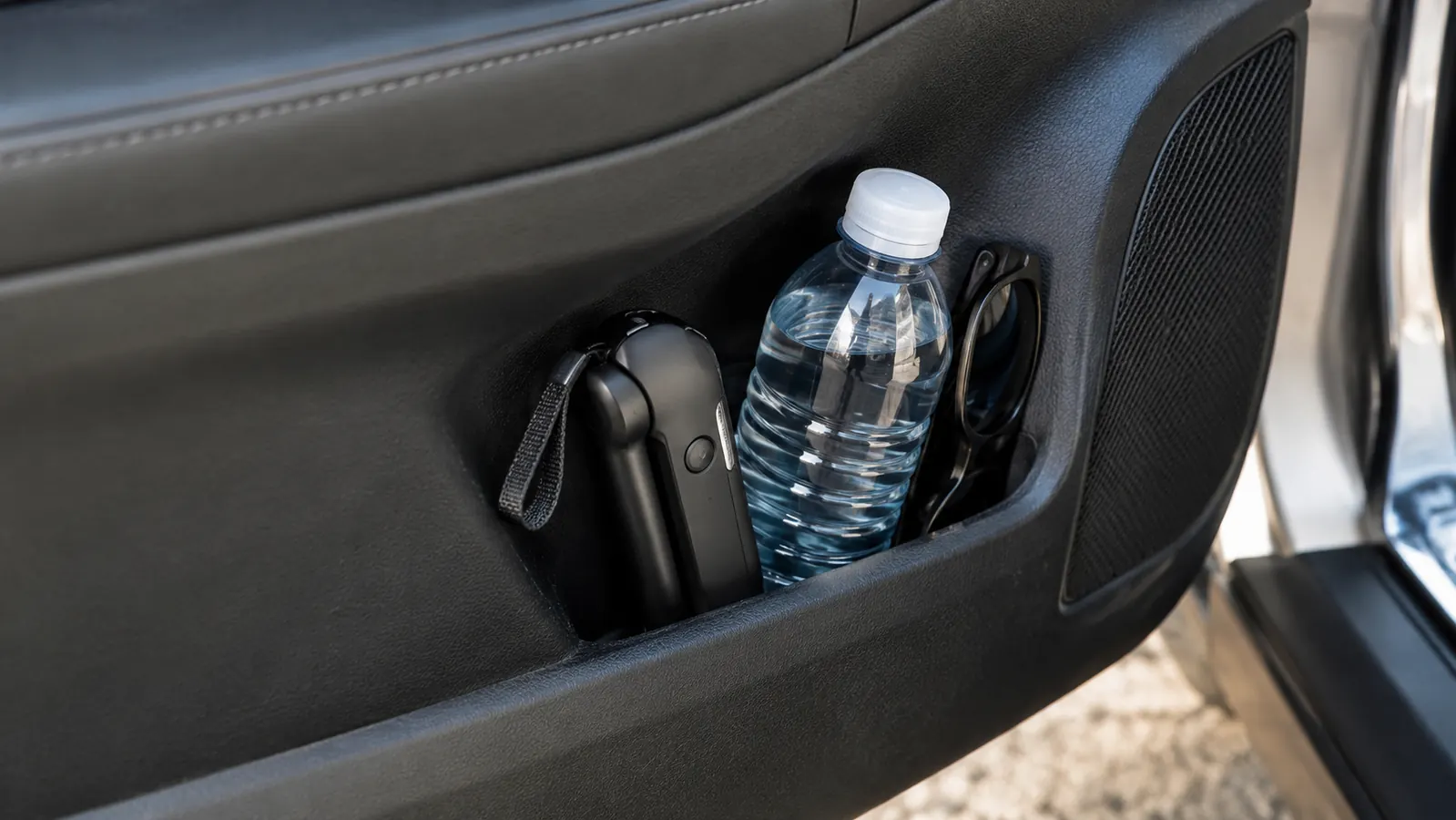
The Stander HandyBar is for anyone who has ever sat in a parked car and felt their stomach drop at the thought of standing up. That includes people with MS, arthritis, Parkinson's, recent surgery, or just the kind of stiff knees that come with a long drive. It is also for the family members who watch and worry. My daughter-in-law bought one for her mother after watching me use mine, and she told me it is the first gift her mother actually uses. That is the highest compliment a mobility aid can get. It is also a small thing, which matters more than you might think: it lives in the door pocket of the CR-V, it comes inside with me at night, and it takes up less room than a water bottle.
Who Should Skip It
Skip it if you never ride in a car, or if your car has a striker post that will not take the clip. Test the fit before you commit. Skip it if you need help with both standing and balance, because the HandyBar is a pull handle, not a support cane, and you will still need one hand on something else. And if you are looking for something that helps you get into the car rather than out of it, this is not that tool. For getting in, I use the door frame and a little extra patience. I will also say this: if the person you are buying for is not open to changing their routine, the first few days will be frustrating for both of you. That is not a reason to skip it. It is a reason to practice together in the driveway before you need it in a real parking lot.
Alternatives I Considered
I looked at permanent vehicle hand grips that bolt to the door frame, and they are excellent for people who only ever ride in one car. They cost more, they take an afternoon to install, and they stay behind when you sell the car. I also tried a strap that loops around the headrest post and hangs down beside the seat. It worked, but it swung when I pulled on it, and the strap stretched just enough to make me feel unsteady, which is the one feeling I cannot afford. And I already own a cane with a wider base, but a cane does not help when you are already seated and need something to pull against. The Stander HandyBar is the only option I found that travels with you, works on two different cars in my life, and costs less than a nice dinner out. It is not perfect. It is just the most useful thing I have bought in years.
If you are still deciding, this is the part that settled it for me: one pull, one pivot, and I was standing.
The Stander HandyBar is small, affordable, and it works on the days that matter most. Worth a look if any of this sounds familiar.
Amazon Check Today's Price on Amazon →